
How Many Puffs Do You Really Get? 12K vs 30K vs 500K
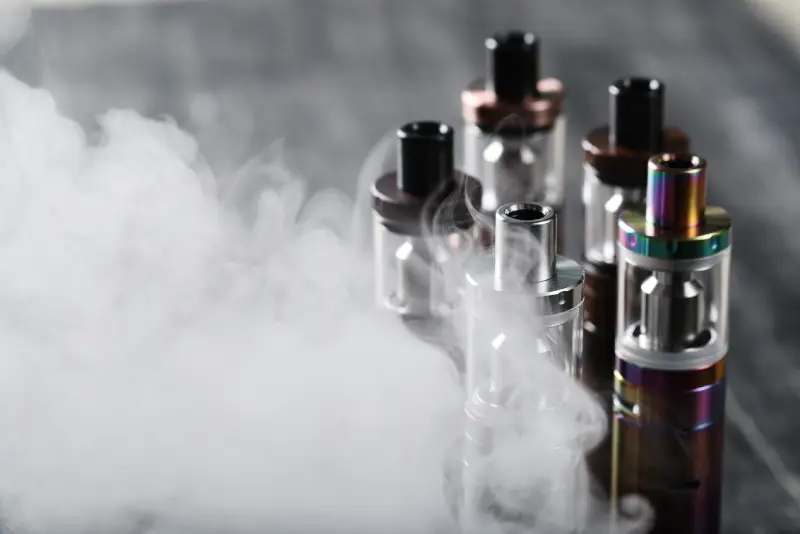
Puff counts on disposable vape packaging are measured on a machine, not by a person. A laboratory puff is typically a 3-second draw at a fixed interval. Real users take longer, harder draws, so the number you actually get is always lower than the number on the box.
All prices on this page are per unit when buying a 10-pack, the basis every product listing on this site uses. A single unit costs more.
Machine puffs vs real puffs
As a working rule for the BANG-series range: expect 60–70% of the stated count in everyday use. A 12,000-puff device realistically delivers 7,000–8,500 draws; a 30,000-puff device lands around 18,000–21,000.
What is actually inside each tier
- 12K–20K: 20–25 ml of e-liquid, 600–650 mAh. Roughly 1–2 weeks for a moderate user.
- 25K–36K: 25–30 ml, 650–850 mAh, usually with a mesh coil and a display screen.
- 50K–120K: 40–60 ml, 1000 mAh and above, rechargeable, often with adjustable airflow.
- 500K: multi-tank designs where the liquid reservoir is separated from the coil. Intended for shared or counter use rather than one pocket.
Why the 500K figure exists
The 500,000-puff class is not a pocket device. It is a countertop format with a large reservoir, aimed at retailers who want a display unit or heavy users who do not want to reorder weekly. If you are buying for personal use, the 20K–36K tier is the sensible middle.
How to make a device last longer
Take shorter draws (2–3 seconds), leave 15–20 seconds between puffs so the wick can re-saturate, keep the device out of direct sun, and recharge before the cell is completely flat rather than after. Chain-vaping is the single biggest killer of both coils and flavour.
Browse the full range with puff count, battery and liquid volume listed on every product: disposable vape devices. Retailers can request bulk pricing on the wholesale page.
18+ only.
Frequently asked questions about vape puff counts
Are the puff counts printed on disposable vape packaging accurate?
They are measured by a machine, not by a person. A laboratory puff is typically a 3-second draw at a fixed interval, while real users take longer, harder draws, so the number you actually get is always lower than the number on the box.
How many puffs do you actually get from a disposable vape?
As a working rule for the BANG-series range, expect 60-70% of the stated count in everyday use. A 12,000-puff device realistically delivers 7,000-8,500 draws, and a 30,000-puff device lands around 18,000-21,000.
What is inside each puff count tier?
12K-20K: 20-25 ml of e-liquid and 600-650 mAh, roughly 1-2 weeks for a moderate user. 25K-36K: 25-30 ml and 650-850 mAh, usually with a mesh coil and a display screen. 50K-120K: 40-60 ml and 1000 mAh or more, rechargeable, often with adjustable airflow. 500K: multi-tank designs where the liquid reservoir is separated from the coil, intended for shared or counter use rather than one pocket.
How can I make a disposable vape last longer?
Take shorter draws of 2-3 seconds, leave 15-20 seconds between puffs so the wick can re-saturate, keep the device out of direct sun, and recharge before the cell is completely flat rather than after. Chain-vaping is the single biggest killer of both coils and flavour.
How to measure your own daily puff count
Every “how long will it last” answer depends on one number you probably do not know: your own daily puff count. Here is a way to get it without any equipment.
- Pick a normal day — not a day you are out all evening, and not a day stuck in back-to-back meetings.
- Count one hour properly. Pick a representative hour and count every draw.
- Multiply by your vaping window. If you vape across roughly 14 waking hours, multiply the hourly count by 14.
Most people land somewhere in these bands:
| Usage | Puffs per day | Typical pattern |
|---|---|---|
| Light | 80–150 | A few draws at breaks, not continuous |
| Moderate | 180–300 | Regular through the day, longer sessions in the evening |
| Heavy | 350–500 | Device in hand most of the day |
| Very heavy | 500+ | Chain sessions, minimal gaps between draws |
Once you have that number, every product page becomes readable: divide the rated puff count by your daily figure and you have days of use.
Puff count tiers against real usage
Using the bands above, here is what each tier actually delivers. These are rated figures; discount by roughly a quarter to allow for longer draws than the test rig uses.
| Rated puffs | Light (120/day) | Moderate (250/day) | Heavy (450/day) | Discounted moderate estimate |
|---|---|---|---|---|
| 12,000 | 100 days | 48 days | 27 days | ~36 days |
| 30,000 | 250 days | 120 days | 67 days | ~90 days |
| 50,000 | 417 days | 200 days | 111 days | ~150 days |
| 100,000 | 833 days | 400 days | 222 days | ~300 days |
| 250,000 | 2,083 days | 1,000 days | 556 days | ~750 days |
| 500,000 | 4,167 days | 2,000 days | 1,111 days | ~1,500 days |
The jump that changes behaviour most is 12K to 50K — that is the difference between reordering fortnightly and reordering twice a year. Beyond 100K the gain is real but harder to notice day to day, because a year is already a long time.
E-liquid volume versus puff rating
A puff rating and an e-liquid volume are two views of the same thing, and checking them against each other is a quick way to spot an inflated claim. Roughly:
- Around 10,000 puffs needs something in the order of 12–15 mL.
- Around 30,000 puffs needs roughly 25–30 mL.
- Around 100,000 puffs needs 40 mL or more, usually split across a reservoir and a separate coil chamber.
If a device claims 100,000 puffs from 15 mL, the rating is marketing rather than measurement. On our product pages the millilitre figure is listed alongside the rating, and they move together.
Why two devices with the same rating can differ
Two 50,000-puff devices are not interchangeable. What separates them:
- Coil design. Mesh coils vaporise more efficiently than round wire, so they deliver a fuller puff from the same liquid.
- Power delivery. A device running hotter produces more vapour per puff, which means fewer total puffs from the same reservoir.
- Airflow. A tighter draw pulls less vapour per puff, stretching the count; an open draw does the opposite.
- Display and features. Screens and adjustable airflow do not change puff count, but they change price and how much you enjoy using it.
This is why the side-by-side puff comparison is worth reading before you buy: it lists every model with its price so you can see where the same rating costs more and why.
Which tier fits which buyer
Light users and first-time buyers
Start small. Something in the 12K–30K band costs less upfront and lets you test a flavour family without committing to months of it. BANG 5K Puffs Disposable Vape, BANG King 12K Puffs Disposable Vape
Regular users
The 50K–80K band is where most people settle: long enough to stop thinking about reordering, small enough that losing one is not a disaster.
Heavy users and resellers
Go up. Cost per puff drops sharply above 100K, and if you are buying to resell, fewer restocks means less admin. QQBANG 500K Puffs Disposable Vape, QQBANG 350K Puffs Disposable Vape
Best cost per puff right now
- QQBANG 500K Puffs Disposable Vape — 500K puffs, A$33.59
- QQBANG 350K Puffs Disposable Vape — 350K puffs, A$34.79
- BANG King 250K Puffs Disposable Vape — 250K puffs, A$33.99
- BANG King 200K Puffs Disposable Vape — 200K puffs, A$39.59
- BANG Blaze 200K Puffs Disposable Vape — 200K puffs, A$41.19
That last list is the one to read if cost is the deciding factor — the same narrow price band covers a puff range of more than fortyfold, so the ratio does the work.
More questions
Does a higher puff count mean stronger nicotine?
No. Puff count is about how long the device lasts; nicotine strength is a separate figure on the product page. A 500,000-puff device and a 12,000-puff one can carry the same concentration.
Do puff counts differ between flavours of the same model?
Not meaningfully. The rating is set by liquid volume and coil efficiency, not by flavour. Perceived differences come from how strong a flavour tastes, not from how long the device lasts.
Why does my device taste burnt before the puff count is up?
Usually chain vaping. Without gaps between draws the wick cannot resaturate, and a dry wick scorches. Leave 20–30 seconds between draws and the problem largely disappears.
Is there a puff count where the device stops working?
No hard cutoff. Flavour gradually fades and vapour drops off as the reservoir empties. You will notice the decline rather than hit a wall.
How do I compare devices across brands?
Divide price by rated puffs. Brand names, battery sizes and feature lists are all secondary to that one ratio — the full working is on our puff count comparison page.
Related reading
- Battery capacity and charging guide — why a bigger battery does not mean more puffs
- How many puffs do you actually need — sizing an order from your usage
- Full product catalogue — all models with puff ratings and prices
- Bulk ordering if you are stocking up, or wholesale if you are reselling
How puff ratings are actually measured
Manufacturers do not guess these numbers. A rating comes from a bench test with fixed parameters, and knowing what those parameters are tells you exactly why your own count comes out lower.
A typical test rig draws for a fixed duration — often around two seconds — at a fixed interval, with the device held at room temperature and fully charged. It repeats until the reservoir is dry or the vapour output drops below a threshold. The total number of draws is the rating.
Now compare that to how people actually vape:
| Variable | Test conditions | Real use | Effect on count |
|---|---|---|---|
| Draw length | ~2 seconds | 3–5 seconds | Longer draws use more liquid per puff — the biggest single factor |
| Gap between draws | Fixed, generous | Often seconds apart | Chain vaping wastes liquid as condensation |
| Battery state | Fully charged throughout | Varies | A low cell produces less vapour, encouraging longer draws |
| Temperature | Room temperature | Cold mornings, hot cars | Cold thickens liquid and reduces wicking |
| Airflow | Factory setting | Often adjusted | A more open draw consumes more per puff |
Stack those and a 25–35 percent shortfall is normal and expected. It is not a defective device, and it is not false advertising — it is a measurement taken under conditions nobody actually vapes in. The rating stays useful because it is applied consistently, so the ratios between models hold.
Planning a full year of vaping
Here is the arithmetic end to end, using a moderate user at 250 puffs a day. That is about 91,000 puffs a year. Applying a 30 percent real-world discount means you need roughly 130,000 rated puffs to cover twelve months.
- Option A — one 120K device. Just about covers the year in a single purchase. One delivery, one charging routine, no reordering. Highest upfront cost, lowest admin.
- Option B — three 50K devices. Comfortable margin, and you can vary the flavour across the year. Slightly more expensive in total than one big device, but you are never stuck with a flavour you have gone off.
- Option C — eight 15K devices. The most expensive route by a wide margin and eight deliveries. Only makes sense if you value a fresh device or like rotating constantly.
For most people Option B is the sensible middle: cheap enough per unit, flexible enough to avoid flavour fatigue, and only a handful of orders a year. If you are buying for more than one person, work the same arithmetic per user and multiply — that is the calculation behind our bulk ordering tiers.
When a puff count claim looks wrong
A few checks before you trust a number:
- Compare against e-liquid volume. 100,000 puffs from 15 mL does not add up.
- Check whether the device is rechargeable. A non-rechargeable cell cannot deliver a six-figure puff count.
- Look at the physical size. Very high ratings need real reservoir capacity, and that takes space.
- Cross-check within a brand range. If one model claims double its siblings at the same size and price, be sceptical.
Every model we list carries its rating alongside volume and pricing on the comparison page, so you can run these checks yourself.
More questions
Do puff ratings expire or degrade in storage?
Slowly. A sealed device stored somewhere cool keeps its liquid well for a long time, but heat and direct sun accelerate flavour loss. Buy what you will use within a year or so.
Does chain vaping really change the count that much?
Yes — it is the second biggest factor after draw length. Without gaps the wick cannot resaturate and liquid is lost as condensation rather than vapour.
Is a bigger device always heavier?
Generally yes, because liquid has mass. A 500K device is noticeably chunkier than a 20K one. If it lives in a pocket, weight is a real consideration.
Can I get an exact number for my own usage?
Not precisely, but the method earlier in this guide gets you within about 15 percent, which is close enough to choose a tier.
What is the highest puff count available?
Our range tops out at 500,000 puffs. Full list with prices is on the comparison page.
Related guides
- Every device rated under 30,000 puffs
- Models in the 30K to 100K puff band
- Devices rated above 100,000 puffs
- BANG 120K Puffs 5-in-1 Flavour Switch Rechargeable Mesh Coil Disposable Vape
- BANG Legend 110K Puffs 3-in-1 Flavour Switch Rechargeable Mesh Coil Disposable Vape
- BANG Legend 150K Puffs 6-in-1 Flavour Switch Rechargeable Mesh Coil Disposable Vape
- BANG Blaze 140K Puffs 3-in-1 Flavour Switch Rechargeable Mesh Coil Disposable Vape
- QQBANG 180K Puffs 4-in-1 Flavour Switch Rechargeable Mesh Coil Disposable Vape
18+ only.
3 Responses